Depression

Intended for teaching residents and consists of 2 modules: brief interventions and anxiety. Each module has background handout, ppt presentation with imbedded case presentations and role play scenarios. Includes great AAP resource for screening tools.
Contains screening and assessment instruments, quick-reference care management advice, step-by-step care plans, time-saving documentation and referral tools, coding aids, billing and payment tips, parent handouts, community resource guides. Could not review entire toolkit. Cost is $80-$150 depending on package and AAP membership. Click here to access some related free tools.
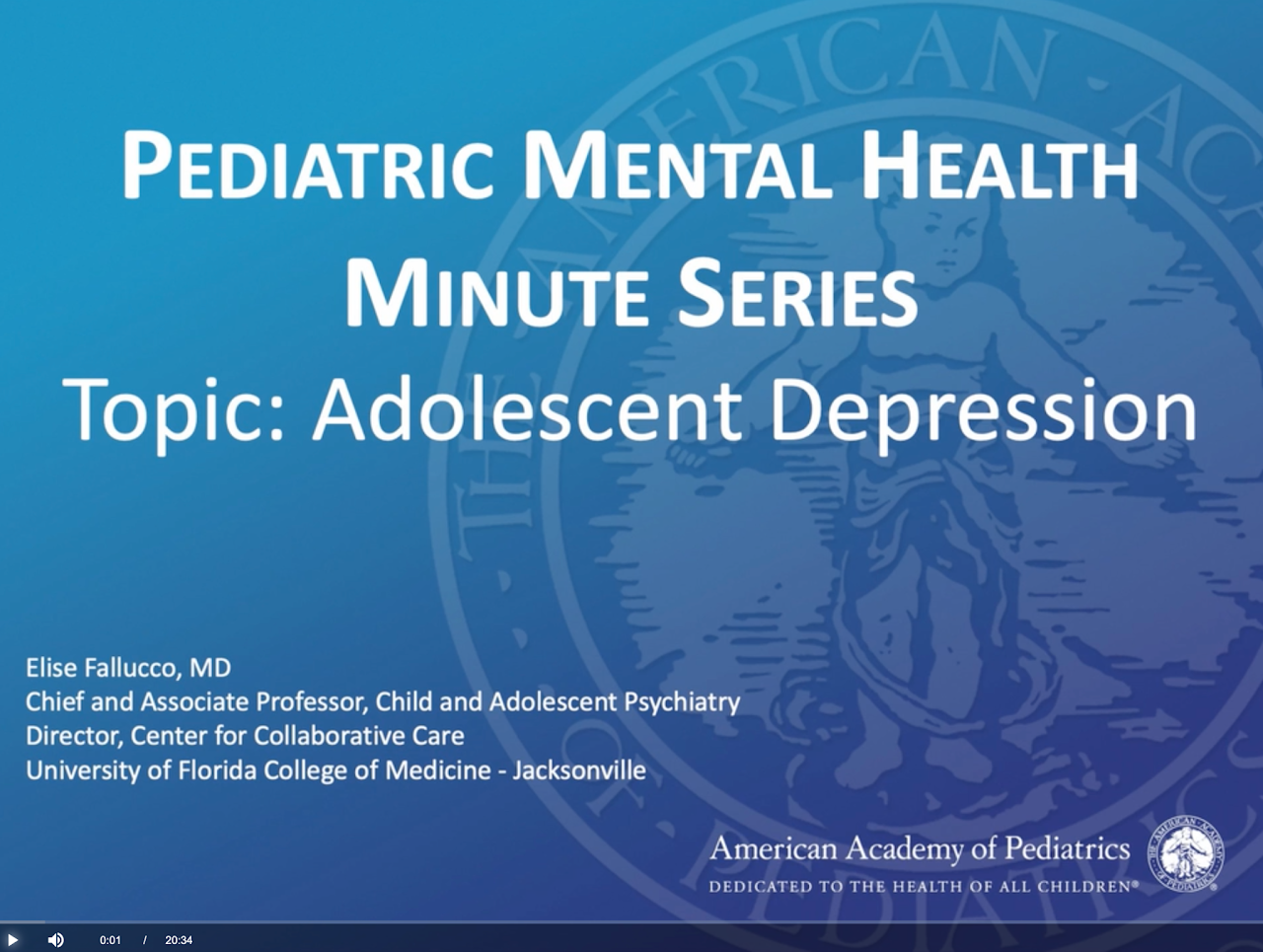
This website includes a lecture on adolescent depression including symptoms, treatment and psychopharmacology of SSRIs. Additional resources are available for pediatricians and families.
Succinct overview of psychopharmacology of SSRIs and SNRIs, definition of adequate trial of therapy, and recommendations for when/how to discontinue therapy.
Helpful slide deck of overview of SSRI and atypical antipsychotics for children, including use in depression, anxiety, and autism.
Good overview of medications used for ADHD, Anxiety, Depression and the mood stabilizers. It provides insight into starting doses, converting dosing, side effects, when to change medications and includes FDA approval and evidence based recommendations from clinical trials. The slides are easy to read and only include high yield recommendations, but it is a thorough resource.
The website includes a summary of the video which discusses commonly used screening tools for assessment of anxiety, depression and ADHD. Additional resources for providers and families are available on the website.
Easily accessible discussion of all classes of psychopharmacology used in pediatric patients, geared towards parents but in appropriate detail for trainees or practicing clinicians.